

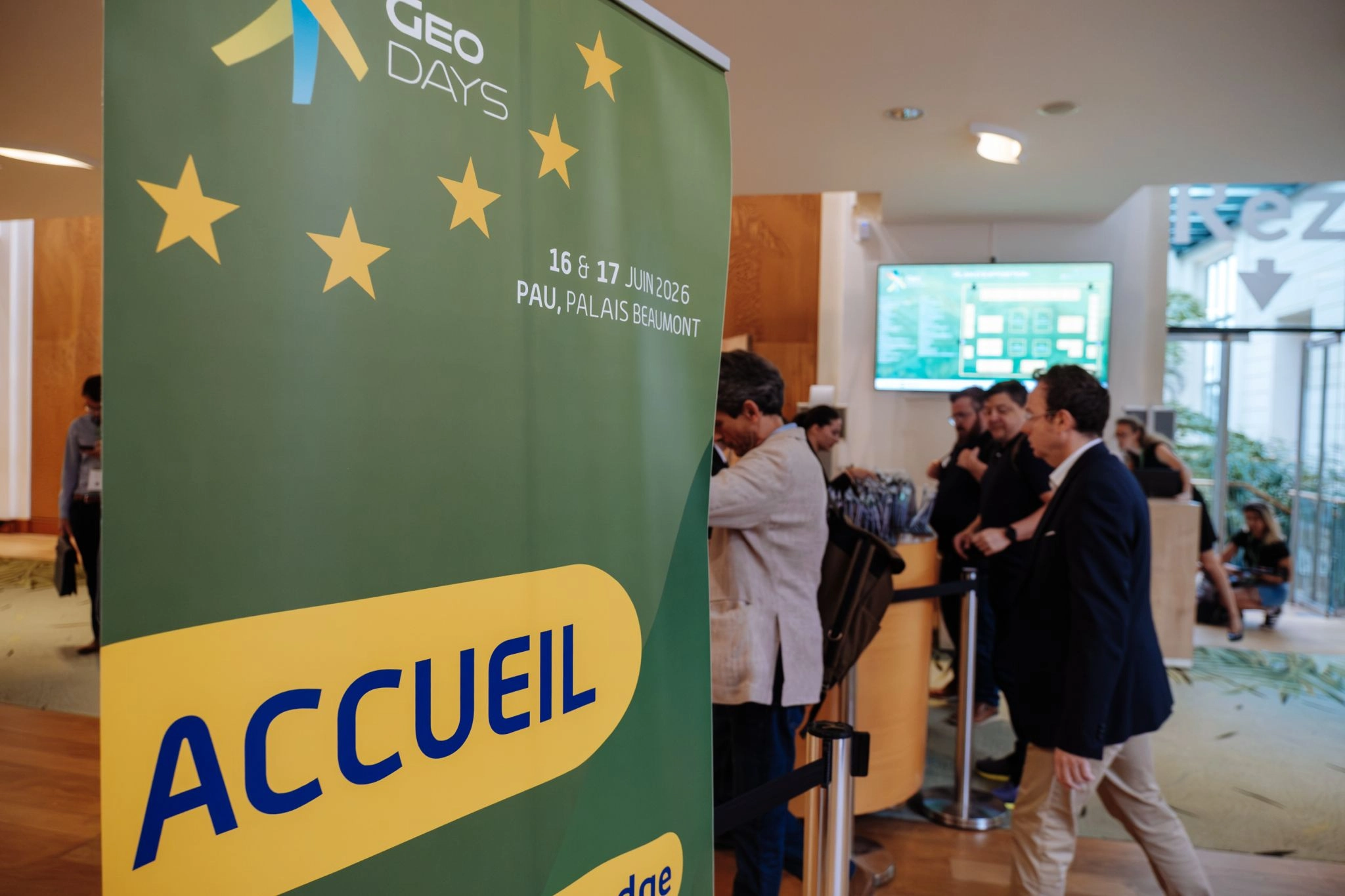
Aragon shares its perspective on natural hydrogen at the European Geodays Conference
The Aragon Hydrogen Foundation participated in an international roundtable in Pau and presented the progress made by the PHYRENE cross-border project in analyzing energy production in the Pyrenees.
The potential of geological or natural hydrogen in the subsoil of the Pyrenees continues to emerge as one of the areas of greatest technical and strategic interest for the energy transition in southwestern Europe. In this context, the Aragon Hydrogen Foundation (FHa) participated last Wednesday, June 17, in a roundtable discussion dedicated exclusively to natural hydrogen, organized as part of Geodays 2026 in Pau (France), the leading European gathering for the subsurface industries.
The discussion session, jointly organized by the Nouvelle-Aquitaine Region, the AVENIA competitiveness cluster, and the European PHYRENE project (Interreg POCTEFA), brought together leading researchers and industry leaders from across the continent. Speakers included Isabelle Moretti, a researcher at the University of Pau and an expert on natural sources of hydrogen; Christophe Hecker, spokesperson for the earth2 initiative; Julien Perrutel, project manager at Mantle 8 (Hydrogeco project); and Luis Carmona, a representative of Helios Aragón, a natural hydrogen producer in the region.
Analysis of Cross-Border Production
Representing the Aragón Hydrogen Foundation, Gianluca Greco, the organization’s head of consulting, was tasked with outlining the autonomous community’s vision and the role the institution plays within the European PHYRENE consortium, an initiative aimed at structuring and promoting the renewable hydrogen value chain in the Spanish-French border region.
During his presentation, Greco outlined the main findings of Report 4.4 of the PHYRENE project, a technical document specifically focused on analyzing the energy production segment for each of the regions that make up the POCTEFA territory.
The Geographical Significance of the Pyrenees
Regarding the role that natural hydrogen plays in the project’s studies, the head of Consulting clarified the nature of their approach: “As for natural hydrogen, we are sharing only a very general analysis of its potential within the cross-border region. The project’s connection to—and true interest in—natural hydrogen in the Pyrenees lies strictly in its geographic location.”
As discussed at the meeting in Pau, the fact that there is active production and exploration taking place on both the Spanish and French sides of the Pyrenees makes this resource a highly significant factor for the comprehensive development of the cross-border energy ecosystem that PHYRENE seeks to establish. Through this participation, the Aragón Hydrogen Foundation reaffirms its commitment to international cooperation and the rigorous analysis of all alternatives that strengthen the energy value chain in the region.
