

Hydrogen could cut 86,400 tons of CO2 in trans-pyrenean transport
The development of hydrogen refueling stations and vehicles could prevent the emission of 86,000 tons of CO2 annually at the borders between France, Spain, and Andorra.
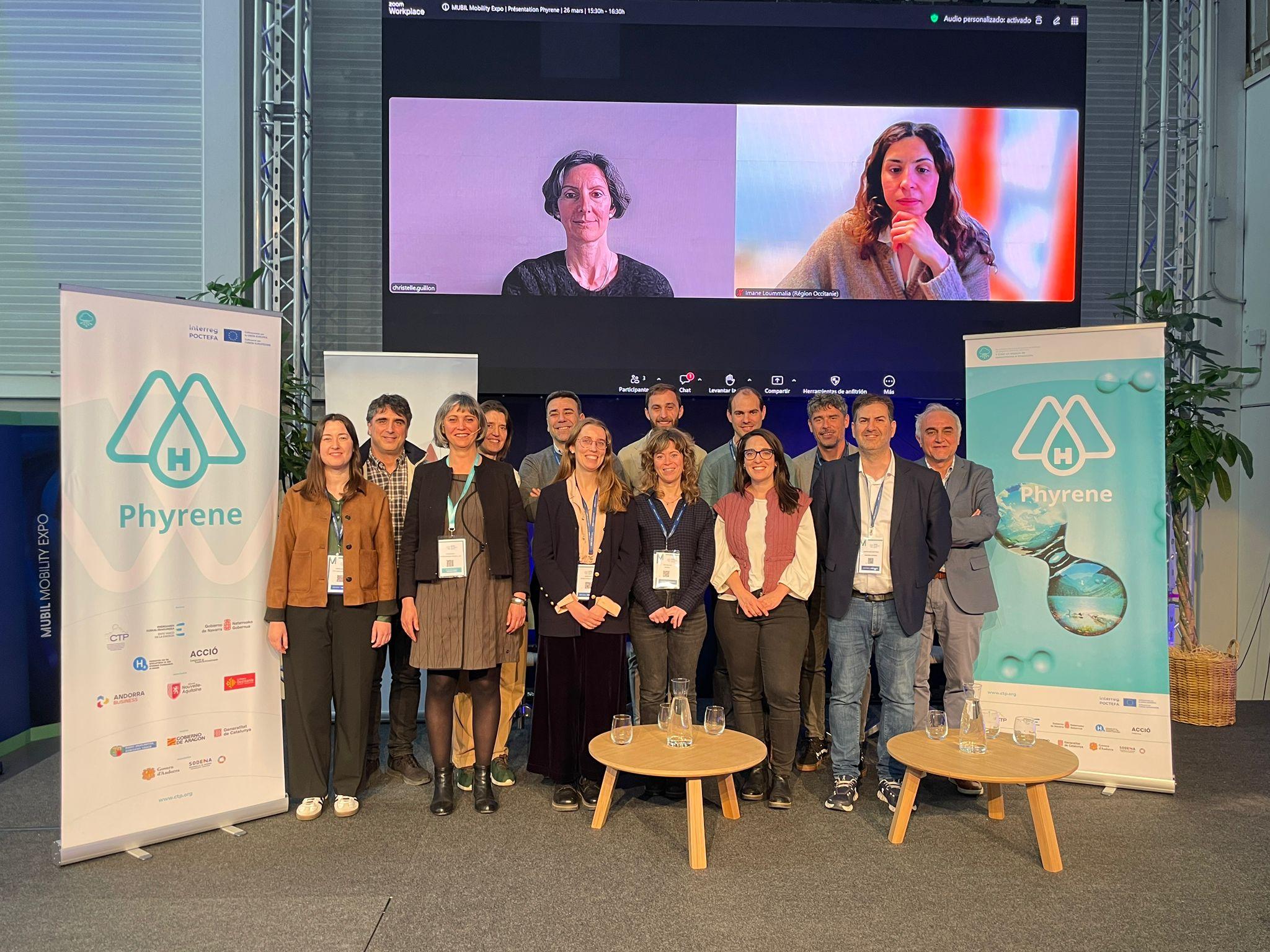
This is one of the key findings from the report “Decarbonization of Road Transport: Economic Development Opportunities and Feasibility Analysis of a Cross-Border Network of Hydrogen Stations,” produced under the PHYRENE project and presented today at the MUBIL sustainable mobility fair in Irún (March 25-26).
Two Scenarios for 2030
The study, commissioned by the Occitanie Region, analyzes the trans-Pyrenean territory and presents two 2030 scenarios for the member regions of the Pyrenees Working Community (CTP):
-
Scenario 1: Foresees 27 stations and a fleet of 1,430 vehicles, avoiding 23,600 tons of CO2 per year.
-
Scenario 2 (Ambitious): Projects 70 stations and 5,210 vehicles, reaching an estimated reduction of 86,400 tons of CO2 annually.
Currently, the territory already has a starting point with 8 operational stations, 7 under construction, and 3 demonstration sites.
The Challenge of Heavy Transport
The report highlights that of the 27 border crossing points, two (the A9 and A63 motorways) record over 10,000 trucks per day. Trucks account for 15% of total traffic but represent 90% of the volume on these two axes, making the decarbonization of heavy transport a regional priority.
“This study proves that the real challenge for hydrogen is better coordinating efforts to transform scattered initiatives into a solid cross-border network,” stated Christelle Guillon, from the Regional Energy and Climate Agency of Occitanie, during her presentation at MUBIL.
Strategic Recommendations
The PHYRENE project proposes three major priorities to accelerate the transition:
-
Establish continuous hydrogen cooperation across Pyrenean borders.
-
Support the deployment of hydrogen ecosystems and vehicles within local administrations and private companies.
-
Coordinate joint advocacy efforts toward the French, Spanish, and Andorran governments, as well as at the European level.
A Multi-Regional Effort
The presentation included a roundtable featuring David Jiménez from the Aragon Hydrogen Foundation (FHa), alongside representatives from EVE (Basque Country), Navarra, Catalonia, Occitanie, New Aquitaine, and Andorra Business.
PHYRENE is funded by the EU through the Interreg POCTEFA program, with a budget of 1.2 million euros. It aims to position the Pyrenees as a European benchmark for the hydrogen economy by 2026.
