

How to Mitigate Technical and Regulatory Risks in European Hydrogen Projects
The transition toward a decarbonized economy in the European Union has ceased to be a horizon of good intentions, transforming instead into a challenge of pure, millimeter-precise infrastructure. The release of the first joint report by the European Network of Hydrogen Transmission Network Operators (ENNOH) and the European Network of Transmission System Operators for Gas (ENTSOG), titled “De-risking Europe’s future hydrogen infrastructure“, marks a critical turning point in continental energy policy. The document details with surgical precision the mechanical, economic, and legislative bottlenecks that threaten to slow down the deployment of the energy vector of the future.
The report demonstrates that the success of the European hydrogen backbone will not depend solely on capital flows, but on the actual capacity of Member States to mitigate technical and regulatory risks in hydrogen projects. These latent challenges range from retrofitting existing gas pipelines and ensuring gas purity to harmonizing cross-border safety regulations. Within this highly complex scenario, the Aragon Hydrogen Foundation (FHA) consolidates its position as a key player in the European ecosystem, offering the technical, validation, and consultancy tools necessary to provide real viability to large-scale projects.
Comprehensive De-risking from Aragon: From Viability to Technical Validation
In response to the market uncertainty and regulatory volatility highlighted by ENNOH and ENTSOG, the Aragon Hydrogen Foundation deploys a suite of cutting-edge services designed to provide certainty to public and private investors and developers:
-
Techno-Economic Analysis and Project Viability: Utilizing advanced simulations, the FHA evaluates the financial viability of green hydrogen production plants, analyzing critical variables such as the levelized cost of hydrogen (LCOH) and optimizing coupling with local renewable energy sources.
-
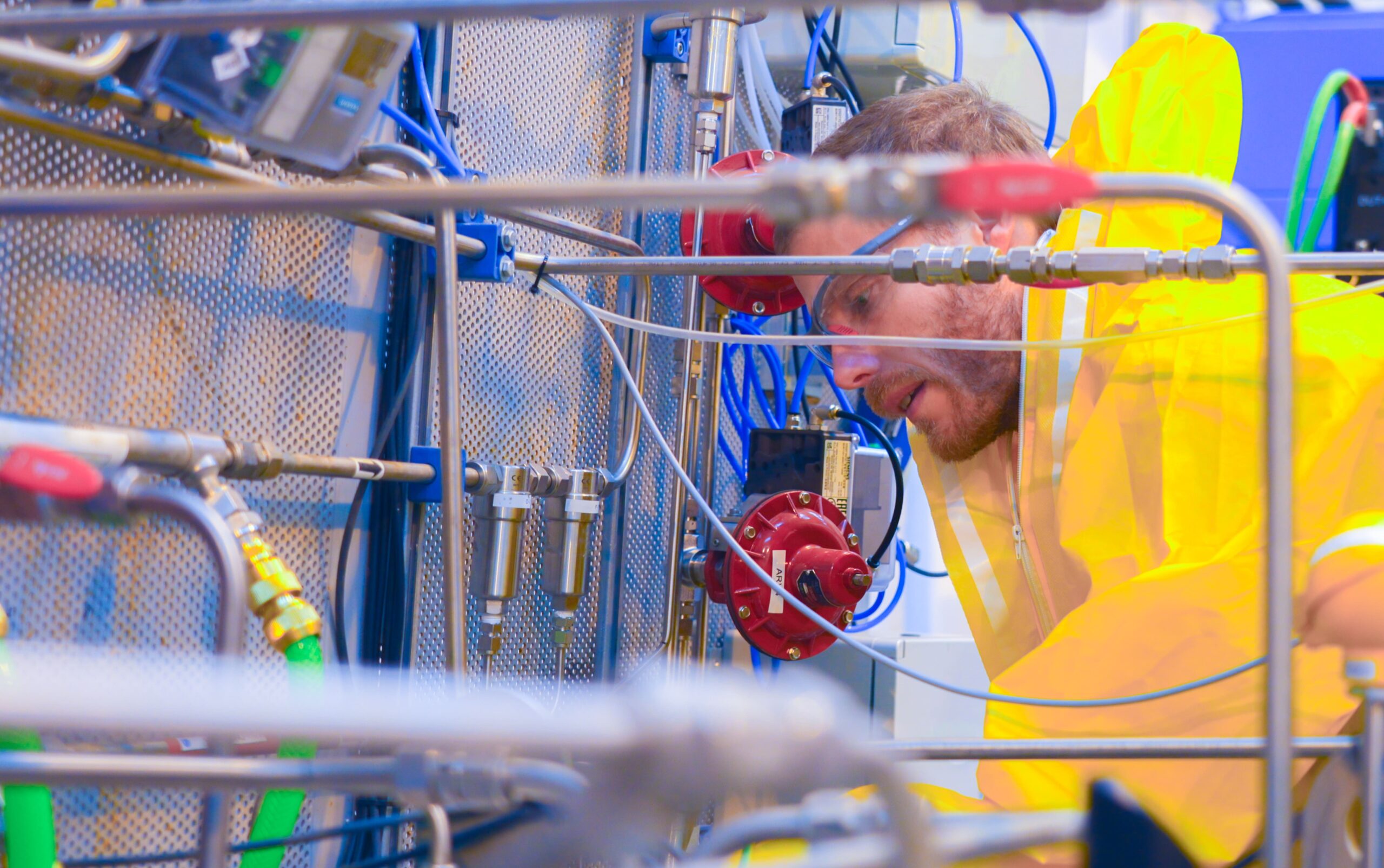
Materials Testing and Validation: The FHA’s specialized testing laboratories and infrastructures allow for real-world component testing under controlled pressure environments. This includes analyzing hydrogen embrittlement in steels and validating the performance of electrolyzers and fuel cells under international standards.
-
Regulatory and Compliance Advisory: With a constantly evolving European framework (Renewable Energy Directives, Delegated Acts), the FHA’s legal and technical team offers continuous guidance to guarantee regulatory compliance and project eligibility for EU funding.
-
Training and Capacity Building: The safe deployment of infrastructure requires highly qualified professionals. The FHa leads technology transfer initiatives and specialized technical training programs, mitigating operational risk through hands-on knowledge.
The ENNOH and ENTSOG report serves as an urgent call to action. Europe requires secure, interconnected infrastructures; Aragon, through the Aragon Hydrogen Foundation, demonstrates that it possesses the scientific, technological, and strategic capability to lead this transformation from southern Europe, reducing risk and turning regulatory theory into a tangible, competitive industrial reality.
