

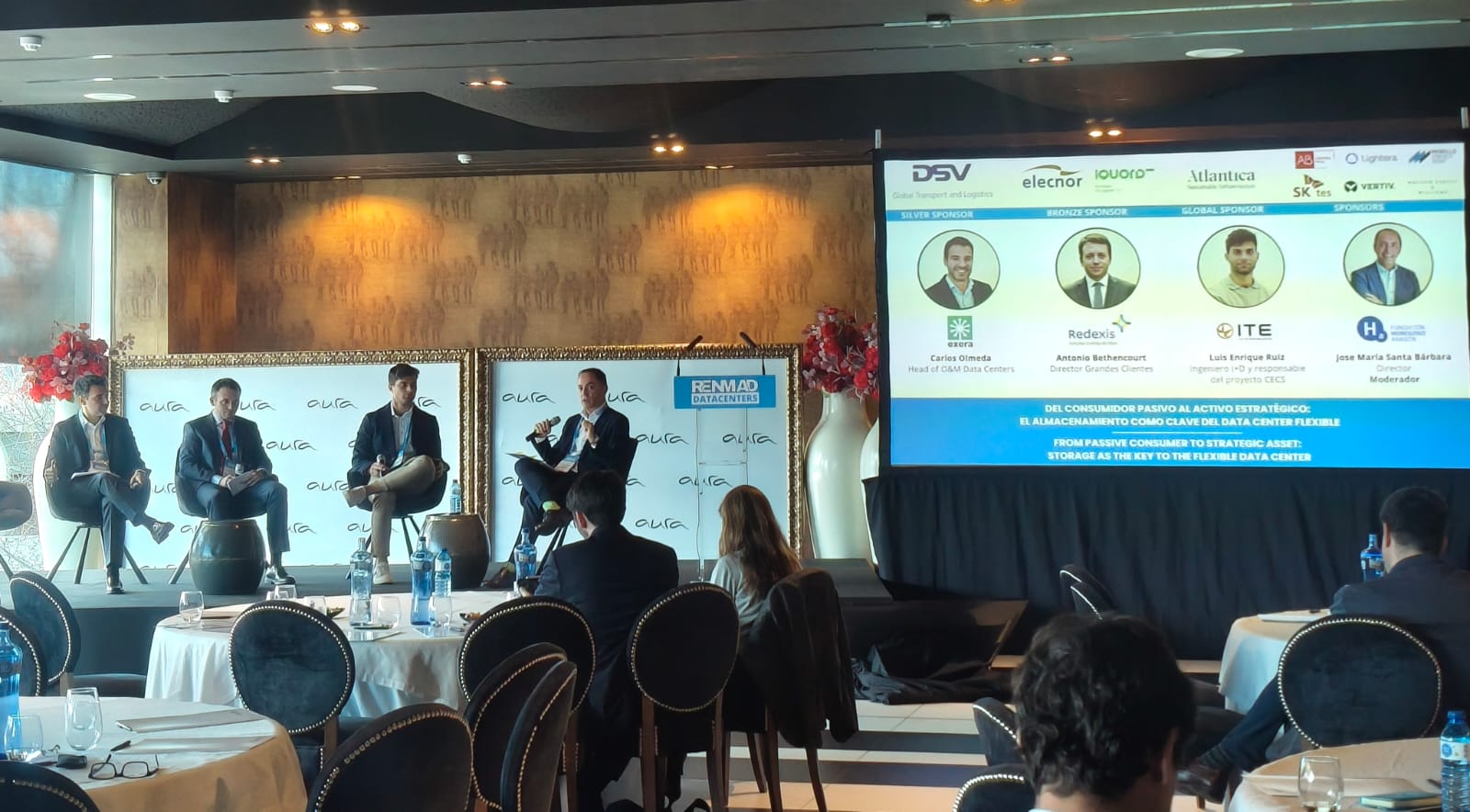
Aragon Hydrogen Foundation drives the strategic energy role of Data Centers
Zaragoza has established itself today as the epicenter of the national technological and energy debate with the celebration of RENMAD Data Centers 2026. At this landmark event, the Aragon Hydrogen Foundation (FHa) participated actively to analyze the sustainability and efficiency challenges that will define the next generation of digital infrastructure in Spain.
Towards a strategic energy node model
The Managing Director of FHa, José María Santa Bárbara, served as moderator for the round table titled “From passive consumer to strategic asset: storage as the key to the flexible data center.” The debate focused on the need for data centers to evolve from a merely consumer role toward an active and dynamic position within the electrical system.
During the session, four fundamental pillars for this transformation were analyzed:
-
Flexibility and Markets: How storage transforms centers into nodes capable of participating in grid services and capacity markets.
-
Regulatory Framework: The critical impact of regulatory milestones—permits, access, and connection—on the viability of new facilities.
-
Technical-Economic Models: The commitment to self-consumption, additionality, and flexible disconnection to act as system assets.
-
Energy Resilience: The use of batteries as a revenue driver and a facilitator for integrating renewable energy.
Hybrid architectures and thermal circular economy
One of the most notable points highlighted by the Foundation was the transition toward hybrid energy architectures. As presented at the meeting, the future of data centers involves combining various backup and management technologies:
-
Large-scale batteries for immediate peak demand management.
-
Gas turbines fueled by biomethane, capable of ensuring operation during prolonged load periods.
-
Traditional backup systems fully integrated into a coordinated and efficient operation.
Furthermore, the debate moved beyond electricity to address thermal efficiency. FHa emphasized the importance of recovering waste heat from cooling processes. This surplus can be converted into electricity or, more immediately, integrated into urban and industrial heating networks. This approach, aligned with Smart Cities initiatives, reduces external energy consumption by third parties and improves the overall sustainability of the urban ecosystem.
A commitment to innovation
The main conclusion of the day in Zaragoza is clear: data centers must become key players in the energy transition. Their ability to generate, store, and redistribute energy positions them as essential components for the stability of both electrical and thermal grids.
The Aragon Hydrogen Foundation thus reaffirms its commitment to promoting hybrid and sustainable solutions, ensuring that the region’s digital growth is consistent with the decarbonization and energy efficiency goals of the 21st century.
